Hungary’s Péter Magyar Seeks Prime Minister’s Office by May 5
Call for Swift Government Formation
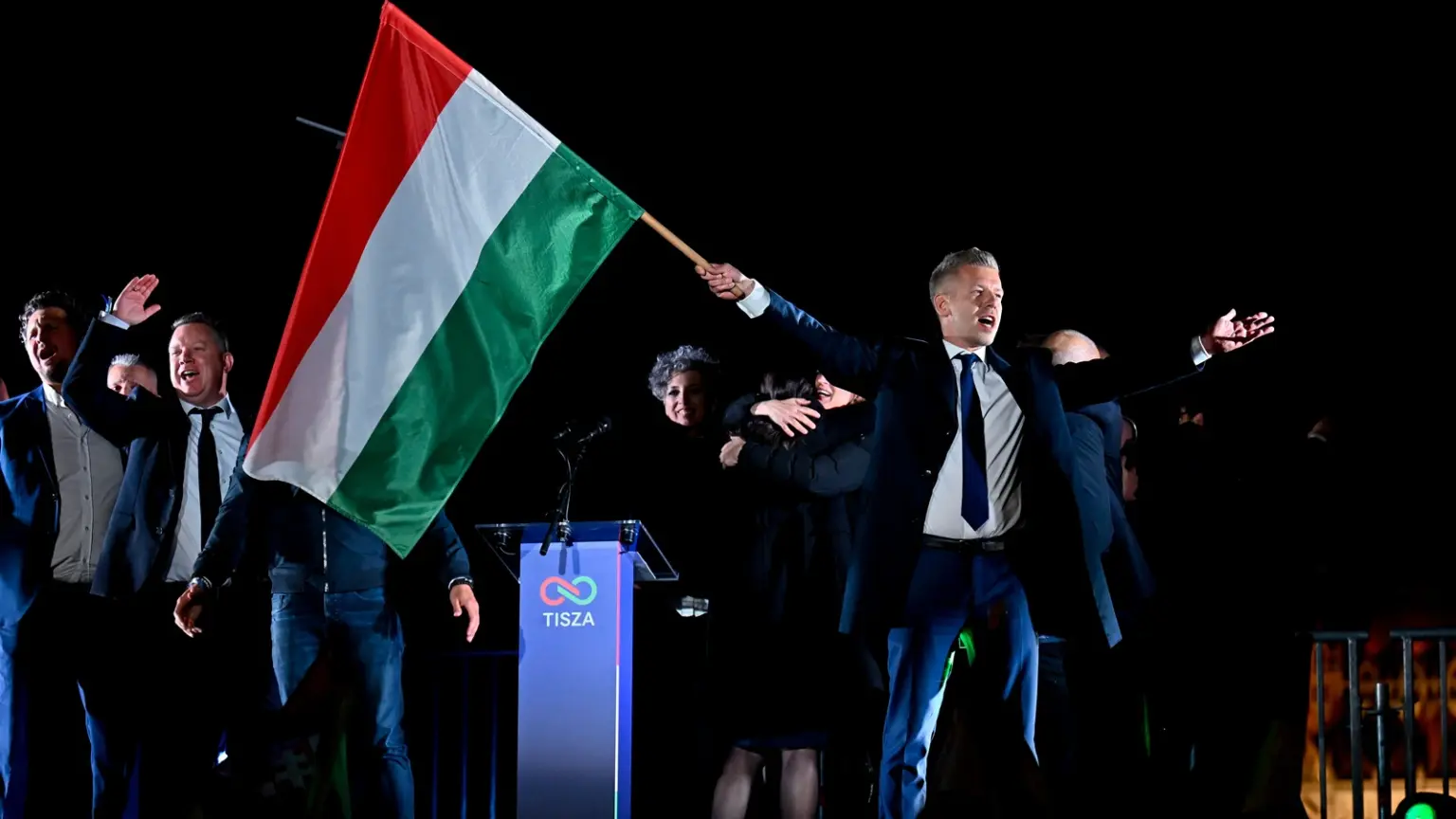
Péter Magyar, the leader of Hungary’s winning Tisza party, has urged the country’s president to summon parliament for the swift formation of a new government. He expressed hopes of succeeding Viktor Orbán as prime minister by May 5.
At a news conference following his party’s victory on Sunday, Magyar claimed that Tisza received a “never-before-seen mandate.” This supermajority, having won 138 of the 199 parliamentary seats, grants Tisza significant authority to implement ambitious reforms.
Magyar emphasized that the Hungarian electorate did not merely seek a change in government but a comprehensive transformation of the regime. He also acknowledged congratulations from Moscow and Beijing, indicating a willingness to collaborate with Hungary’s new administration. “Hungarians said yesterday they will write their history, not in Moscow, not in Beijing, not in Washington,” he remarked.
Plans for Change and Reform
Throughout his campaign, Magyar vowed to pivot Hungary away from its recent ties with Russia, aiming to strengthen relationships with European allies. His platform promises to address corruption and restore a functioning democracy, contrasting with the past 16 years under Orbán’s leadership, which he described as autocratic and detrimental to the rule of law.
However, it remains uncertain what tangible changes will be put into effect. During Orbán’s tenure, he utilized a two-thirds parliamentary majority to enact sweeping changes, including the introduction of a new constitution and alterations to the electoral system. Magyar’s Tisza party now possesses the same supermajority and the potential to revoke much of the legislation that enabled Orbán to consolidate power, limit press freedom, and marginalize the LGBTQ+ community.
Civic Response to the Election Results
Magyar’s election victory sparked celebrations in Budapest, with thousands of residents, predominantly younger voters, expressing enthusiasm over the potential end of Orbán’s leadership. Streets echoed with car horns and anti-government songs as individuals gathered to celebrate.
One celebratory participant, Adrien Rixer, returned from London to cast his vote, stating he was “over the moon” about Hungary’s political change. He expressed relief at being able to identify as a proud Hungarian once again.
Despite excitement regarding the two-thirds majority, some citizens voiced skepticism regarding the breadth of changes this mandate might bring. Dániel Kovács, a reveler, remarked on the uncertainty of whether a two-thirds majority could ensure a fair government.
Unprecedented Election Outcome
Magyar and the Tisza party achieved an unprecedented victory in Hungary’s post-Communist history, securing a larger vote count and more parliamentary seats than any party before them. Analyst Bulcsú Hunyadi highlighted that while Tisza’s constitutional majority endows it with significant power to reverse Orbán’s policies, many key institutions remain under the influence of individuals loyal to the former government. These officials were strategically placed by Orbán, making their removal challenging even with a new governing authority.
In his victory speech, Magyar challenged these officials, including Hungary’s president, to resign voluntarily, acknowledging limited mechanisms for their dismissal. Hunyadi noted that these loyalists have cemented their positions, complicating potential reform efforts.
Economic and EU Relations
Magyar criticized Orbán’s administration for economic mismanagement and corruption, which he asserts has led to wealth concentration among a select group while neglecting ordinary citizens. He committed to accountability and plans to establish an Office for the Recovery and Protection of National Assets to pursue ill-gotten gains.
Additionally, Magyar campaigned to secure the release of billions of euros in EU funding that has been frozen due to concerns over Hungary’s adherence to democratic norms. He has also promised to introduce the euro by 2030, a shift from Orbán’s long-standing opposition.
Hunyadi foresees that Magyar’s government will face pressure from the EU to enact reforms swiftly, as certain deadlines for unfreezing funds loom. This context adds urgency to the implementation of policies essential for Hungary’s economic recovery.
The shift in government has raised hopes within the EU that Budapest will adopt a more cooperative stance regarding Ukraine and curtail Orbán’s prior antagonism, which included blocking sanctions against Russia. Ukrainian Foreign Minister Andrii Sybiha anticipated that the election results might foster a normalization of political relations after a campaign marked by contentious rhetoric regarding Ukraine.