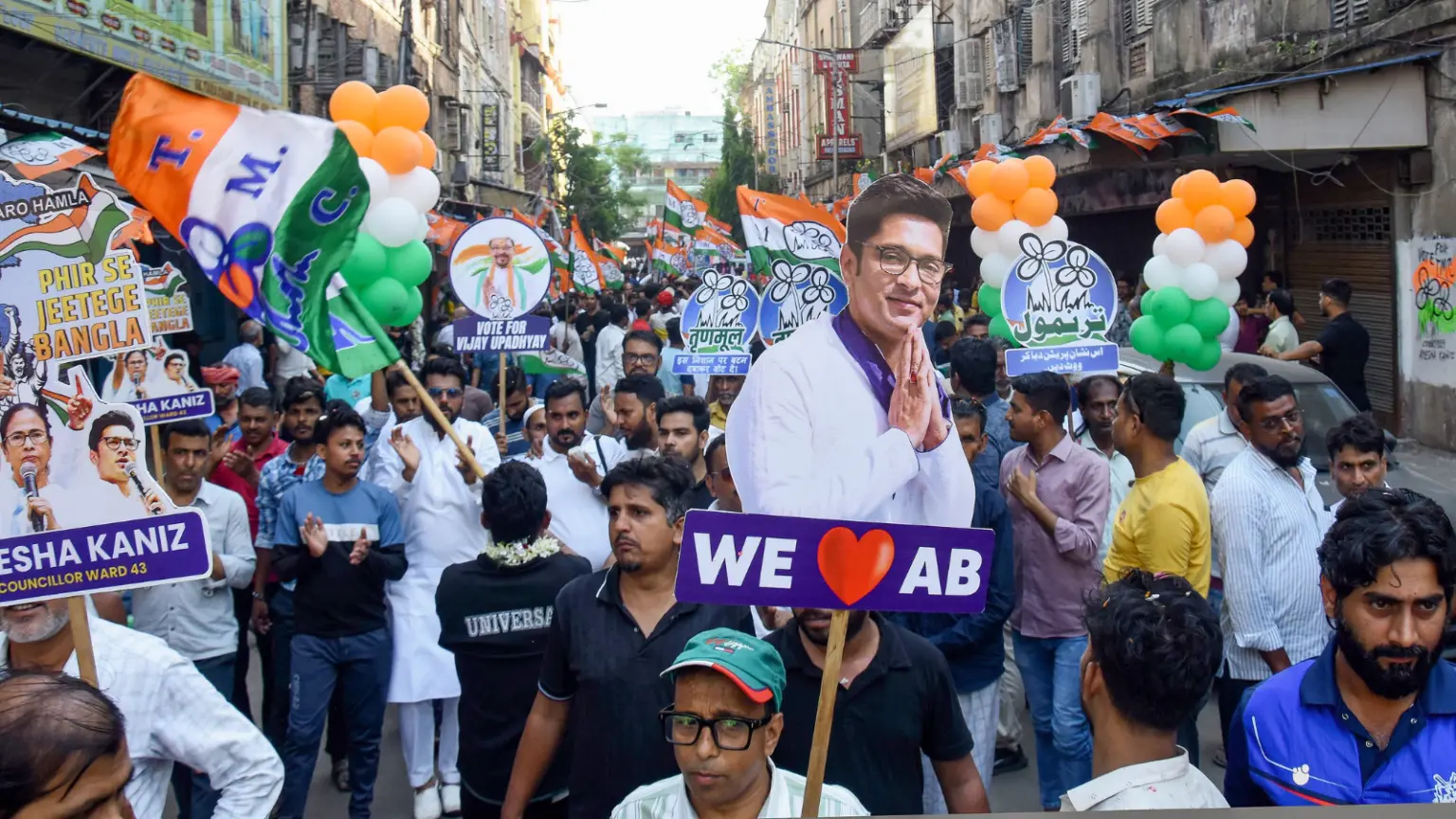
TMC’s Strategic Approach Ahead of West Bengal Assembly Elections
Ambitious Goals for Assembly Seats
As the first phase of West Bengal’s Assembly elections approaches, the ruling Trinamool Congress (TMC) is aiming not only to retain its 215 seats but also to expand its influence, targeting approximately 250 out of the 294 constituencies in the state. Chief Minister Mamata Banerjee has set a goal to win 226 seats, while party national general secretary Abhishek Banerjee has expressed an even more ambitious objective of securing 250 constituencies. This strategy is rooted in an analysis of the previous election results.
The TMC is particularly focusing on 30 to 35 seats from the 29 Lok Sabha constituencies where it performed well in the 2024 polls. Additionally, over 100 Assembly seats that were closely contested in 2021, with margins of less than 15,000 votes, are being closely monitored by the party. Data shows that in at least 34 seats, where the winning margins were under 5,000 votes, the BJP won 21 times while the TMC claimed 13 victories.
Impacts of Electoral Roll Revisions
The Special Intensive Revision (SIR) of electoral rolls has prompted the TMC to amplify its efforts in ensuring accurate voter arithmetic. In total, 44 constituencies have witnessed voter deletions that exceed the victory margins recorded in 2021 elections. Of these constituencies, the TMC had won 24 while the BJP claimed 20. A specific example can be seen in Samserganj, where the TMC won by a significant margin of 26,111 votes, yet 74,775 voters have been deleted from the electoral rolls. In Balarampur, where the BJP won by only 273 votes, deletions amounted to 1,037 voters.
In places like Gaighata, a BJP-held seat, 19,638 names have been removed, contributing to the tightening electoral landscape as well. Even in Bagdah, where the BJP won by a margin of 9,907 votes, over 10,000 voters have been affected by deletions. Among seats with winning margins between 5,000 and 10,000 votes, the TMC emerged victorious in 24 out of roughly 33 constituencies, while the BJP won nine, indicating substantial voter shifts and challenges.
Data-Driven Campaigning Strategy
The TMC has adopted a campaign strategy that marries data analytics with cultural messaging, focusing on outreach efforts that address the interests of various demographics. Case studies highlighting voters impacted by the SIR process, along with testimonials from beneficiaries of welfare programs, form the backbone of the campaign narrative. This campaign also incorporates elements of Bengali cultural pride (“asmita”) and utilizes traditional storytelling formats like “panchali” to present the TMC’s achievements and objectives.
Enhanced Mobilization Tactics
In a shift from previous approaches, TMC insiders report that the current campaign places less emphasis on individual leadership and more on grassroots mobilization. Besides large rallies featuring Banerjee and Abhishek, the TMC is increasingly engaging in “chhoto sabhas” or local meetings to connect with voters at the booth level directly. War rooms have been established across all 294 Assembly constituencies staffed by approximately 20 members dedicated to campaign operations.
Since the election announcement on March 15, both Mamata and Abhishek have been actively involved in three to four rallies daily across the state. This is complemented by regular grassroots activities that include two to three micro-meetings at each booth weekly, aiming to engage 250 to 300 local residents—enhancing community interaction and participation.
Targeted Outreach Initiatives
The TMC’s campaign incorporates a robust network of over 100,000 “shadow agents” responsible for monitoring Booth Level Officers (BLOs) and overseeing electoral roll changes. This meticulous tracking extends to all campaign aspects—from rallies to door-to-door outreach and addressing grievances related to SIR processes. Dedicated teams are focused on targeted outreach initiatives for farmers, women, elderly voters, and Scheduled Castes/Scheduled Tribes communities, ensuring that all segments of the populace are engaged systematically.
The campaign also features engaging visual elements, including a snakes-and-ladders-style game board that symbolizes the TMC’s “10 pratigyas” (vows) as pathways of development, while depicting Opposition forces as obstacles to progress.