

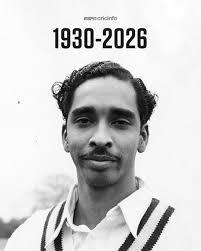
Remembering C D Gopinath, the Last Link with India’s First Test Victory
Passing of a Cricket Legend
The Indian cricket community mourns the loss of C D Gopinath, the final surviving member of the Indian team that achieved the nation’s first Test victory against England in Chennai in 1952. His passing marks the end of an era, as he represented the connection to the amateur period of the sport in India.
Gopinath’s contributions to the game played a significant role in India’s emergence as a cricketing powerhouse. The victory he played a part in is viewed as a pivotal moment, not only for the sport but also for a nation that was just five years old at the time.
A Notable Career
C D Gopinath was known for his explosive batting style, particularly his square cut shot, which became a hallmark of his play. Throughout his Test career, he participated in eight matches, where he showcased his talent intermittently. His notable contributions include a crucial innings of 35 runs and a 93-run partnership with Polly Umrigar in the second innings of the match that paved the way for India’s first Test win.
Three years following his debut Test victory, Gopinath took the reins as captain for the Tamil Nadu team, leading them to their first Ranji Trophy title in 1955. His impact on Indian cricket extended beyond his playing days.
Continued Involvement in Cricket
Even after retiring from the sport, Gopinath remained actively engaged with cricket. He took on the role of a selector, where he recognized and nurtured young talent, including Gundappa Viswanath, who would go on to be regarded as one of India’s all-time great players.
Well into his 80s, Gopinath continued to attend Test matches in Chennai, demonstrating his enduring passion for the game. His presence at these events was a testament to his lifelong connection with cricket, as he remained a dedicated observer of the sport he loved.
A Legacy Remembered
C D Gopinath’s death signifies the loss of a foundational figure in Indian cricket history. He was not only an accomplished player but also a storyteller who shared anecdotes about the pre-Independence era, linking a bygone history to the present. His unique beginnings—born during a curfew in 1930 and affectionately nicknamed “Baby Gun” by his doctor—further highlight the extraordinary journey he undertook in his life and career.
With Gopinath’s passing, Indian cricket has bid farewell to its last connection with the moment that heralded the birth of its Test cricket legacy. His contributions to the game continue to inspire future generations, serving as a reminder of the rich history that has shaped Indian cricket today.
Follow US
https://www.facebook.com/charchaexpress
https://www.youtube.com/@charcha-express
https://www.instagram.com/charcha.express/
Contents
Passing of a Cricket LegendThe Indian cricket community mourns the loss of C D Gopinath, the final surviving member of the Indian team that achieved the nation’s first Test victory against England in Chennai in 1952. His passing marks the end of an era, as he represented the connection to the amateur period of the sport in India.Gopinath’s contributions to the game played a significant role in India’s emergence as a cricketing powerhouse. The victory he played a part in is viewed as a pivotal moment, not only for the sport but also for a nation that was just five years old at the time.A Notable CareerC D Gopinath was known for his explosive batting style, particularly his square cut shot, which became a hallmark of his play. Throughout his Test career, he participated in eight matches, where he showcased his talent intermittently. His notable contributions include a crucial innings of 35 runs and a 93-run partnership with Polly Umrigar in the second innings of the match that paved the way for India’s first Test win.Three years following his debut Test victory, Gopinath took the reins as captain for the Tamil Nadu team, leading them to their first Ranji Trophy title in 1955. His impact on Indian cricket extended beyond his playing days.Continued Involvement in CricketEven after retiring from the sport, Gopinath remained actively engaged with cricket. He took on the role of a selector, where he recognized and nurtured young talent, including Gundappa Viswanath, who would go on to be regarded as one of India’s all-time great players.Well into his 80s, Gopinath continued to attend Test matches in Chennai, demonstrating his enduring passion for the game. His presence at these events was a testament to his lifelong connection with cricket, as he remained a dedicated observer of the sport he loved.A Legacy RememberedC D Gopinath’s death signifies the loss of a foundational figure in Indian cricket history. He was not only an accomplished player but also a storyteller who shared anecdotes about the pre-Independence era, linking a bygone history to the present. His unique beginnings—born during a curfew in 1930 and affectionately nicknamed “Baby Gun” by his doctor—further highlight the extraordinary journey he undertook in his life and career.With Gopinath’s passing, Indian cricket has bid farewell to its last connection with the moment that heralded the birth of its Test cricket legacy. His contributions to the game continue to inspire future generations, serving as a reminder of the rich history that has shaped Indian cricket today.