

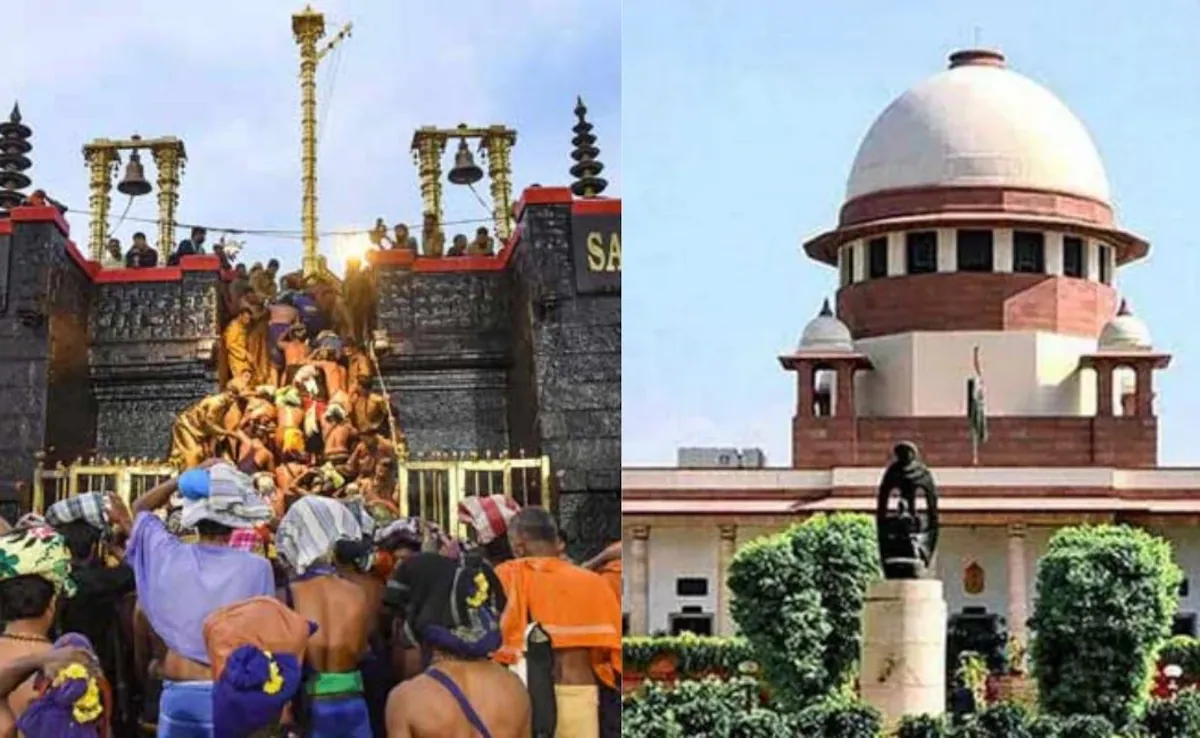
Supreme Court Affirms Right to Review Religious Practices in Sabarimala Case
Judicial Review and Superstition
The Supreme Court of India, in a hearing regarding the Sabarimala temple case, emphasized its authority to examine religious practices for elements of superstition. Chief Justice Surya Kant led the bench which asserted that the court would not accept the position that the legislature holds the “last word” on such matters. This assertion was made during discussions surrounding a constitutional challenge over the temple’s prohibition of women and girls aged 10 to 50 from entering.
The court articulated its jurisdiction in assessing whether certain practices are superstitious, stating that subsequent legislative actions may follow its review. The bench firmly rejected the argument that the legislature’s decisions should be deemed final in these instances.
Arguments from the Solicitor-General
During the proceedings, Solicitor-General Tushar Mehta contended that a secular court lacks the expertise to determine if a religious practice is superstitious. He stated that judges are proficient in legal matters rather than religious doctrines, highlighting the diverse cultural fabric of India where varying beliefs exist.
Mehta also referenced specific regional laws, such as Maharashtra’s Black Magic Act, to illustrate that what can be deemed religious in one context might be considered superstition by another. In response, Justice Ahsanuddin Amanullah criticized Mehta’s simplification of the issue at hand.
Judicial Inquiry into Religious Practices
Justice Joymalya Bagchi probed whether the court would be able to act if it received a petition under Article 32 regarding witchcraft as a religious practice, questioning if it could invoke the principle of ‘unoccupied field’ to prohibit such practices on ethical grounds. Mehta acknowledged that the court could intervene on grounds related to public order and morality but argued that it could not do so merely on the basis of superstition.
Justice Bagchi pointed out that it is the court’s duty to scrutinize these principles rigorously, suggesting that they often extend them to their logical extremes for assessment.
Limits of Court’s Jurisdiction
Justice MM Sundresh shared that the federal government should not impose limits on the court’s jurisdiction in these matters, indicating that denying the court’s authority would undermine its role in addressing potentially void or voidable actions, akin to the case of sati.
Mehta responded that he does not contest the court’s core jurisdiction but emphasized that the court is protective of its powers, as it should be.
Identifying Essential Religious Practices
Justice BV Nagarathna, another member of the bench, focused on identifying what constitutes ‘essential’ religious practices, suggesting that the Sabarimala restrictions should be assessed through the philosophy of the faith rather than applying criteria from other religions. She noted that any evaluation must consider public order and morality alongside the essence of the religious beliefs involved.
Chief Justice Kant recognized the court’s limitations in replacing subject-matter experts but stressed that if a practice, such as witchcraft or cannibalism, were found to shock the court’s conscience, initial assessment could eliminate the need for further adjudication.
Government’s Position on Women’s Rights
In the argument presented, the government stated that women have historically occupied a revered status in India. It contended that the restrictions at Sabarimala are not purely based on gender discrimination but are rooted in specific religious beliefs and the characteristics of Lord Ayyappa, who is perceived as an eternal celibate.
The government maintained that the practices of all religious denominations deserve respect, asserting that these practices cannot be examined solely through the lenses of individual dignity or bodily autonomy.
Follow US
https://www.facebook.com/charchaexpress
https://www.youtube.com/@charcha-express
https://www.instagram.com/charcha.express/
Contents
Judicial Review and SuperstitionThe Supreme Court of India, in a hearing regarding the Sabarimala temple case, emphasized its authority to examine religious practices for elements of superstition. Chief Justice Surya Kant led the bench which asserted that the court would not accept the position that the legislature holds the “last word” on such matters. This assertion was made during discussions surrounding a constitutional challenge over the temple’s prohibition of women and girls aged 10 to 50 from entering.The court articulated its jurisdiction in assessing whether certain practices are superstitious, stating that subsequent legislative actions may follow its review. The bench firmly rejected the argument that the legislature’s decisions should be deemed final in these instances.Arguments from the Solicitor-GeneralDuring the proceedings, Solicitor-General Tushar Mehta contended that a secular court lacks the expertise to determine if a religious practice is superstitious. He stated that judges are proficient in legal matters rather than religious doctrines, highlighting the diverse cultural fabric of India where varying beliefs exist.Mehta also referenced specific regional laws, such as Maharashtra’s Black Magic Act, to illustrate that what can be deemed religious in one context might be considered superstition by another. In response, Justice Ahsanuddin Amanullah criticized Mehta’s simplification of the issue at hand.Judicial Inquiry into Religious PracticesJustice Joymalya Bagchi probed whether the court would be able to act if it received a petition under Article 32 regarding witchcraft as a religious practice, questioning if it could invoke the principle of ‘unoccupied field’ to prohibit such practices on ethical grounds. Mehta acknowledged that the court could intervene on grounds related to public order and morality but argued that it could not do so merely on the basis of superstition.Justice Bagchi pointed out that it is the court’s duty to scrutinize these principles rigorously, suggesting that they often extend them to their logical extremes for assessment.Limits of Court’s JurisdictionJustice MM Sundresh shared that the federal government should not impose limits on the court’s jurisdiction in these matters, indicating that denying the court’s authority would undermine its role in addressing potentially void or voidable actions, akin to the case of sati.Mehta responded that he does not contest the court’s core jurisdiction but emphasized that the court is protective of its powers, as it should be.Identifying Essential Religious PracticesJustice BV Nagarathna, another member of the bench, focused on identifying what constitutes ‘essential’ religious practices, suggesting that the Sabarimala restrictions should be assessed through the philosophy of the faith rather than applying criteria from other religions. She noted that any evaluation must consider public order and morality alongside the essence of the religious beliefs involved.Chief Justice Kant recognized the court’s limitations in replacing subject-matter experts but stressed that if a practice, such as witchcraft or cannibalism, were found to shock the court’s conscience, initial assessment could eliminate the need for further adjudication.Government’s Position on Women’s RightsIn the argument presented, the government stated that women have historically occupied a revered status in India. It contended that the restrictions at Sabarimala are not purely based on gender discrimination but are rooted in specific religious beliefs and the characteristics of Lord Ayyappa, who is perceived as an eternal celibate.The government maintained that the practices of all religious denominations deserve respect, asserting that these practices cannot be examined solely through the lenses of individual dignity or bodily autonomy.